Obesity can make everyday activities harder, reduce energy levels, and increase the risk of several health problems. Starting a Gym for Obesity programme can be an effective step towards improving fitness, managing body weight, and creating healthier habits. For people living in Jamia Nagar, Okhla, or Batla House, regular gym exercise can provide structure for a sustainable weight-loss journey.
According to the World Health Organization's obesity and overweight facts, about 16% of adults worldwide were living with obesity in 2022, and adult obesity has more than doubled globally since 1990. This shows why practical and sustainable obesity management has become increasingly important.
Can a Gym Cure Obesity?
A gym should not be considered a stand-alone cure for obesity. Obesity is a complex condition affected by eating habits, physical activity, genetics, environment, sleep, health conditions, and other factors. However, a properly planned Gym for Obesity routine can play an important role in long-term weight management.
Regular workouts help increase physical activity, improve fitness, build strength, and increase energy expenditure. When gym training is combined with suitable nutrition, recovery, sleep, and professional healthcare when required, it can become an important part of a realistic obesity-management plan.
If you are searching for a Gym for weight loss around Jamia Nagar, Okhla, or Batla House, focus on a gym where you can train regularly. You can also read this guide to choosing the Best Gym in Jamia Nagar before selecting a fitness centre.
Why Exercise Is Important for Obesity
The relationship between obesity and exercise is straightforward. Physical activity increases the amount of energy your body uses. When this is combined with suitable eating habits, it can support weight loss and help you manage your body weight over the long term.
The NIDDK guidance on eating and physical activity for weight management explains that physical activity helps the body use more calories and may also support healthier blood pressure and blood glucose levels.
A Gym for Obesity also gives you different ways to stay active instead of depending on one exercise. You can combine walking, cycling, resistance exercises, functional movements, and cardio depending on your ability and fitness level.
Athletic Fitness also provides different gym programs for strength, cardio and fitness, allowing members to explore options such as strength training, HIIT cardio, CrossFit, spinning, and other forms of exercise.
Gym Benefits for Obesity
The main gym benefits for obesity go beyond the calories burned during a single workout. Consistent exercise can improve cardiovascular fitness, muscular strength, stamina, mobility, and your ability to perform normal activities more comfortably.
Some important benefits include:
-
Increased daily physical activity
-
Better cardiovascular fitness
-
Improved muscular strength
-
Greater stamina
-
Better mobility
-
Increased calorie expenditure
-
Structured workout routines
-
Easier fitness tracking
-
Support for weight management
-
Greater confidence with exercise
Regular exercise for obesity can therefore provide benefits even if your weight does not change dramatically within the first few weeks. Your stamina, strength, walking ability, and overall fitness may begin improving while your long-term weight-management plan continues.
How Does a Gym Help You Lose Weight?
1. It Helps Increase Calorie Expenditure
One reason people choose a Gym to lose weight is that physical activity increases the amount of energy the body uses. Walking, cycling, cross-training, rowing, strength exercises, and other activities can all contribute to your weekly physical activity.
According to the CDC's guidance on physical activity and weight, combining increased physical activity with reduced calorie intake creates the calorie deficit required for weight loss. Regular physical activity is also important for maintaining weight loss.
2. Strength Training Builds a Stronger Body
A good Gym for Obesity routine should not involve only walking on a treadmill. Resistance training using machines, dumbbells, resistance bands, or suitable body-weight movements can help improve muscular strength and physical capacity.
If you are new to resistance exercise, the Ultimate Workout Guide for Strength, Muscle and Fitness can help you understand how structured strength exercises fit into a complete fitness routine.
Beginners should start with manageable resistance and focus on learning proper exercise form. Increasing weights too quickly is unnecessary, particularly when your first goal is simply becoming active and building a consistent routine.
3. Gym Makes Progress Easier to Track
A Gym for weight loss makes it easier to measure your exercise progress. You can track workout duration, treadmill speed, cycling distance, repetitions, resistance levels, and the number of workouts completed every week.
Progress does not always mean lifting heavy weights. Walking for five minutes longer, completing another repetition, using slightly more resistance, or attending the gym consistently for several weeks are all meaningful forms of improvement.
4. Gym Helps Build a Routine
For many people, the biggest challenge with exercise for obesity is consistency. Having a fixed location and regular workout schedule can make physical activity part of your weekly lifestyle.
If you live around Jamia Nagar, Okhla, or Batla House, choosing a gym close to your home or workplace can make regular training easier. Convenience can be particularly valuable when you are building a new habit.
Best Gym Exercises for Obesity and Weight Loss
There is no single exercise that is best for everyone. Your ideal Gym for Obesity workout should depend on your current weight, fitness level, mobility, joint comfort, medical history, and previous exercise experience.
A beginner-friendly routine may include:
|
Exercise |
Main Purpose |
Beginner Approach |
|
Treadmill walking |
Cardiovascular fitness |
Begin at a comfortable pace |
|
Stationary cycling |
Low-impact cardio |
Start with light resistance |
|
Cross trainer |
Cardio and stamina |
Increase time gradually |
|
Seated row |
Upper-body strength |
Use manageable resistance |
|
Chest press |
Upper-body strength |
Focus on controlled movement |
|
Leg press |
Lower-body strength |
Begin with a light load |
|
Body-weight exercises |
Functional fitness |
Modify according to ability |
|
Stretching |
Mobility |
Use comfortable movements |
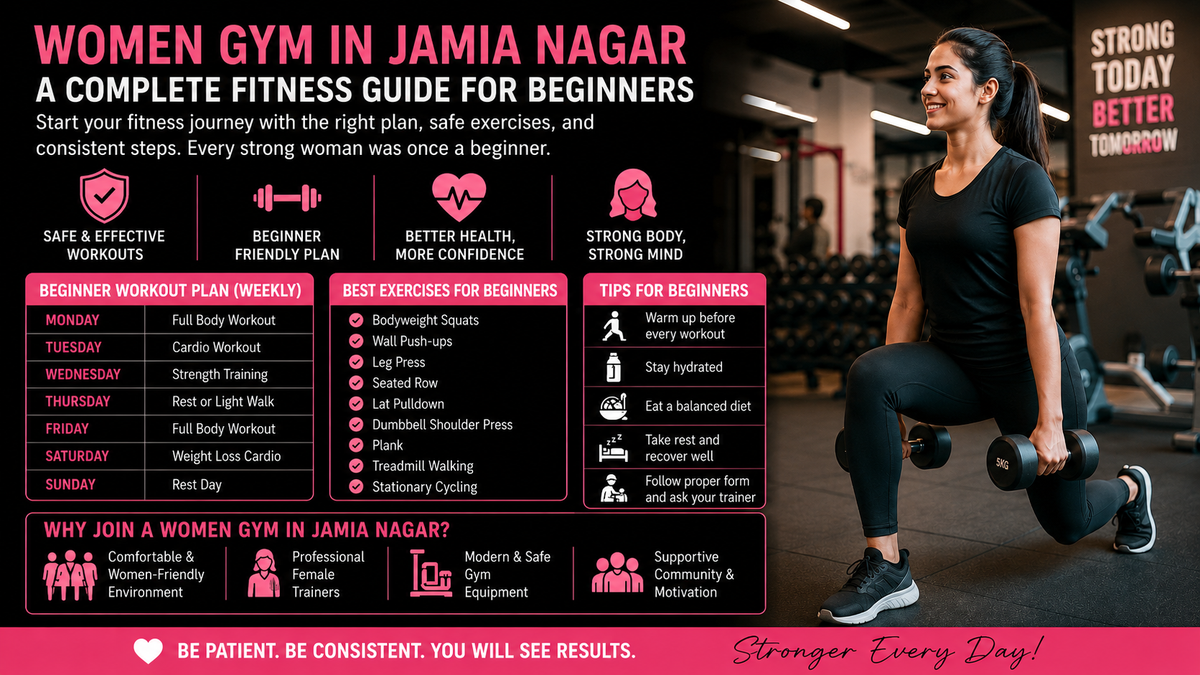
Women who are new to exercise can also read the Safe Gym Workout Guide for Women Beginners in Jamia Nagar, which covers beginner cardio, strength exercises, workout safety, and gradual progression.
When choosing a Gym to lose weight, look for a programme that allows gradual progression. A workout does not have to leave you completely exhausted to be useful.
How Much Exercise Do You Need?
For general health, the CDC physical activity guidelines for adults recommend at least 150 minutes of moderate-intensity aerobic activity each week, or 75 minutes of vigorous activity, or an equivalent combination. Adults should also perform muscle-strengthening activities on at least two days each week.
You do not need to complete 150 minutes in one or two workouts. Someone beginning exercise for obesity can start with shorter sessions and gradually increase exercise duration and frequency as fitness improves.
Example Beginner Gym Schedule
|
Day |
Workout |
|
Monday |
20–30 minutes walking + beginner strength exercises |
|
Tuesday |
Light activity or recovery |
|
Wednesday |
Cycling + upper-body exercises |
|
Thursday |
Rest or comfortable walking |
|
Friday |
Cardio + lower-body exercises |
|
Saturday |
Light full-body activity |
|
Sunday |
Recovery |
This schedule is only an example. A Gym for Obesity programme should always be adjusted according to your ability, recovery, health, and fitness level.
Weight Loss Through Gym: Exercise Alone Is Not Enough
One common mistake is assuming that joining a Gym to lose weight means you can ignore your diet. Gym training is valuable, but sustainable weight loss through gym works better when exercise is combined with sensible eating habits.
The updated WHO healthy diet guidance recommends a varied diet based largely on minimally processed foods. WHO also recommends at least 400 grams of fruit and vegetables per day for people older than 10 and limiting free sugars to less than 10% of daily energy intake.
A healthy weight-management approach can include:
-
Balanced meals
-
Appropriate portions
-
Vegetables and whole fruits
-
Adequate protein
-
Whole grains and pulses
-
Regular physical activity
-
Adequate sleep
-
Proper hydration
-
Stress management
-
Realistic goals
If you are unsure how to structure food around training, read the Beginner Gym Diet Plan. It explains basic pre-workout and post-workout food choices for people who are starting gym training.
Vegetarian members focusing on weight management can also follow the practical ideas in the Vegetarian Gym Diet Plan for Weight Loss, which discusses calorie control, protein sources, meal planning, and common diet mistakes.
Do You Need to Lose a Huge Amount of Weight to Improve Health?
No. Your first target does not have to be a dramatic transformation. Gradual progress is usually easier to maintain and can still provide meaningful health benefits.
According to NIDDK's obesity treatment guidance, losing around 5% of body weight over six months may be a suitable initial goal for some people. Losing excess weight may also help improve health problems associated with overweight and obesity.
This is why a Gym for weight loss should focus on measurable and sustainable progress instead of promising extremely fast results.
Track changes such as:
-
Body weight
-
Waist measurement
-
Workout consistency
-
Walking duration
-
Strength
-
Stamina
-
Energy levels
-
Exercise performance
Small improvements that can be maintained are usually more useful than extreme plans followed for only a few days.
Obesity and Exercise: Cardio vs Strength Training
People often ask whether cardio or strength training is better when discussing obesity and exercise. The two do different jobs, so a balanced routine can include both.
Cardio Can Help With:
-
Increasing physical activity
-
Improving cardiovascular fitness
-
Building stamina
-
Increasing calorie expenditure
-
Improving exercise capacity
Strength Training Can Help With:
-
Improving muscular strength
-
Making daily activities easier
-
Building physical capacity
-
Training major muscle groups
-
Creating a balanced fitness routine
For most beginners using a Gym for Obesity, the most useful programme is not necessarily the hardest one. It is the programme they can perform safely and continue consistently.
Common Mistakes When Using a Gym to Lose Weight
Exercising Too Hard on the First Day
You do not need an extreme first workout. Starting too aggressively may leave you very sore and make it harder to return consistently.
Begin with exercises and durations you can manage. Gradually increase your workload as your strength and fitness improve.
Doing Only Cardio
Spending every gym session on a treadmill is not the only approach to weight loss through gym training.
A balanced routine can combine aerobic exercise with strength training, mobility work, and normal daily physical activity.
Expecting Immediate Results
Obesity normally develops over time, so improving body weight and fitness also takes time. A Gym for Obesity should help you create habits that can continue for months and years.
Avoid programmes promising unrealistic transformations within a few days.
Ignoring Your Diet
A Gym for weight loss cannot compensate for every eating habit. Frequent high-calorie snacks, sugary beverages, large portions, and inconsistent eating can make weight management more difficult.
Think of nutrition and exercise as two parts of the same long-term plan.
Comparing Yourself With Other People
Your current fitness, body weight, lifestyle, health, sleep, and exercise history are different from those of another gym member.
Track your progress against your own starting point instead of comparing yourself with someone training beside you.
How to Choose a Gym for Obesity in Jamia Nagar or Okhla
If you are searching for a Gym for Obesity in Jamia Nagar, choose a fitness centre where you feel comfortable training consistently.
Athletic Fitness describes itself as a Best Unisex Gym in Jamia Nagar and is located in Batla House, Jamia Nagar, Okhla. Its website lists cardio, strength training, CrossFit, functional training and trainer support among its facilities and services.
When comparing gyms, consider:
-
Convenient location
-
Clean workout environment
-
Cardio equipment
-
Strength-training equipment
-
Beginner-friendly workouts
-
Trainer availability
-
Flexible timings
-
Suitable membership options
-
Space for mobility exercises
-
Ability to track progress
You can also review available gym membership plans before deciding which membership period fits your routine and budget.
For beginners who need exercise guidance, training with expert gym trainers can also make it easier to learn exercise technique and build a structured routine.
A Simple Starting Plan for Beginners
If you have not exercised regularly before, the first target should be building consistency rather than completing advanced workouts.
A simple Gym for Obesity session could begin with:
-
5–10 minutes of comfortable warm-up
-
15–25 minutes of cardio
-
4–6 beginner resistance exercises
-
Gentle mobility or stretching
-
Gradual progression
-
Enough recovery between harder sessions
You can slowly increase your exercise duration, number of repetitions, or resistance as your fitness improves.
The goal of obesity and exercise management is to create a routine that becomes part of your normal lifestyle rather than something you follow only for a few weeks.
When Should You Speak to a Doctor Before Starting?
People living with obesity can benefit from physical activity, but exercise should match individual health needs.
The CDC guidance for adults with chronic health conditions advises people with chronic conditions or disabilities to discuss appropriate types and amounts of physical activity with a healthcare professional or physical-activity specialist when needed.
Speak with a healthcare professional before beginning demanding exercise if you have significant health concerns, serious mobility limitations, cardiovascular problems, or another medical condition that may affect exercise.
Some people may also require medical obesity treatment alongside lifestyle changes. Gym training is one part of obesity management, not a replacement for necessary professional healthcare.
Frequently Asked Questions
1. Can gym help with obesity?
Yes. Regular gym exercise can support weight management, fitness, stamina, and strength.
2. Which exercise is best for obesity?
Walking, cycling, low-impact cardio, and strength exercises are useful options for many beginners.
3. Is gym good for weight loss?
Yes. A Gym for weight loss can increase physical activity and calorie expenditure.
4. How often should an obese person exercise?
Start gradually and build towards regular weekly aerobic and strength exercise.
5. Can exercise alone cure obesity?
No. Exercise for obesity works best alongside healthy eating and other lifestyle changes.
6. Is strength training good for obesity?
Yes. Strength training can improve muscle strength, mobility, and overall fitness.
7. How long should beginners exercise?
Many beginners can start with short 20–30 minute sessions and increase gradually.
8. Where can I find a gym for weight loss in Jamia Nagar?
Look for a beginner-friendly gym around Jamia Nagar, Okhla, or Batla House with cardio, strength equipment, and trainer support.
Start Your Weight-Loss Journey With the Right Approach
Managing obesity does not mean punishing yourself with difficult workouts. It means becoming more active, improving your fitness, eating sensibly, building strength, and creating habits that you can continue.
The right Gym for Obesity programme can provide structure and make regular physical activity easier to maintain. Your goal should be sustainable progress rather than extreme short-term results.
Whether you are from Jamia Nagar, Okhla, or Batla House, beginning with a manageable workout and gradually improving your routine can be a practical first step towards better fitness and long-term weight management.